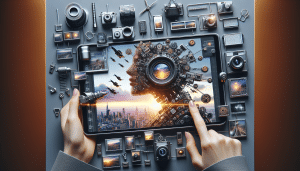
Artificial Intelligence Changes How You Interact With Technology
Percival Thorn November 1, 2025
Artificial intelligence is quietly reshaping the world of technology around you. This article explores how AI is being woven into daily life, the devices used at home and work, and what this evolution means for technology users. Discover the trends, opportunities, and challenges of an AI-driven future in tech.
What Artificial Intelligence Means for Modern Technology
Artificial intelligence, often abbreviated as AI, refers to the development of computer systems that can perform tasks normally requiring human intelligence. This includes functions like learning, reasoning, decision making, language understanding, and even creativity. AI may sound futuristic, but it’s now present all around: in phones, search engines, and the basic algorithms that control how information is delivered and processed. The rise of AI has accelerated in recent years thanks to advances in machine learning and data availability. As a result, technology platforms integrate AI not as a feature, but as a fundamental building block that powers everything from smart assistants to financial predictions.https://www.nibib.nih.gov/science-education/science-topics/artificial-intelligence
What makes AI intriguing is its ability to learn from the data fed into it. Early computer programs could only do what they were told, but artificial intelligence can detect patterns, adapt, and improve its own output over time. This dynamic element allows AI to power things like predictive text on phones, virtual assistants, and facial recognition software. The most advanced applications use deep learning, a technique inspired by the way the human brain processes information, to navigate complex, ambiguous environments—making technology feel more intuitive than ever before.
Many believe that AI is still at an early stage of integration. Today, it quietly streamlines tasks behind the scenes. Think about search engines returning relevant results or platforms recommending media you might enjoy. These processes are powered by algorithms that constantly evolve and analyze personal preferences and global patterns. As AI grows more capable and nuanced, it is expected to drive even more transformative shifts in how humans and technology interact on a daily basis.
How AI Is Integrated Into Devices and Applications
You may not notice, but artificial intelligence is already at the heart of most smart devices. From smartphones and wearables to home assistants, AI technology optimizes the way users communicate, search, and interact with their gadgets. For example, AI algorithms filter unwanted noise on voice calls or correct grammar and spelling in real time. These enhancements are subtle but create a smoother and more personalized experience for device owners. As technology continues to evolve, the role of AI in shaping human-device interaction continues to expand, opening up possibilities such as gesture controls or advanced accessibility features for those living with disabilities.https://www.nibib.nih.gov/science-education/science-topics/artificial-intelligence
Applications of AI aren’t limited to personal tech. Businesses, healthcare providers, and researchers use AI to analyze huge amounts of data, automate administrative work, and detect patterns that humans might miss. In healthcare, AI can help doctors predict disease outbreaks, assist with diagnosis through imaging tools, or personalize treatments based on data analysis. In business settings, AI chatbots offer customer service around the clock, answering common questions and routing complex issues to humans. This lets employees focus on higher-level thinking and creative problem solving rather than repetitive or time-consuming tasks.
Smart home devices showcase another clear application of artificial intelligence. These systems learn user preferences to optimize energy usage, manage lighting, or improve security. For example, a thermostat can adjust itself based on when residents are home, or a doorbell camera can distinguish between a delivery person and a passing dog. These are just a few ways AI is being integrated into the background of daily routines, with future advancements expected to support even more seamless and proactive help from technology.
AI Transforming Work, Education, and Entertainment
Artificial intelligence is revolutionizing the modern workplace by automating routine processes, providing actionable insights, and enhancing decision-making. Employees benefit from AI-powered scheduling assistants, recommendation systems that suggest new ways to complete projects, and data analysis tools that reveal critical business trends. Rather than replacing jobs outright, AI tends to augment human skills, allowing professionals to focus on tasks that require creativity, empathy, or complex judgment. This synergy is especially prominent in fields such as finance, manufacturing, and logistics, where efficiency and accuracy matter most.https://www.edx.org/learn/artificial-intelligence
Education is also being transformed by the thoughtful deployment of artificial intelligence. Adaptive learning platforms adjust lessons based on individual student progress, helping teachers identify where extra support is needed. This personalization allows students to advance at their own pace and can close knowledge gaps more efficiently than traditional one-size-fits-all methods. AI-powered language translation tools break down barriers for international collaboration, making global education more accessible and connected than ever before. These advancements point to an exciting new era in teaching and learning, fueled by real-time feedback and continuous improvement through data.
Entertainment industries incorporate AI in almost every area of content creation and delivery. Streaming services use complex recommendation engines to serve up films and shows that match individual viewing habits. Music platforms create custom playlists for listeners, while video games introduce adaptive challenges that respond to how a player interacts. In the background, AI tools speed up animation, script analysis, and even visual effects, enabling creators to deliver richer stories and more engaging experiences. This deep integration ensures users always discover something new and tailored to their preferences.
Challenges, Ethics, and Responsible Use in AI
The integration of artificial intelligence into daily technology use isn’t without challenges. The reliance on large sets of personal data raises concerns about privacy and information security. Users may feel wary about how personal information is collected, analyzed, and stored by AI-driven applications. Transparency is key—AI developers and companies are under pressure to explain how their systems work, what data is collected, and how it’s used to shape user experiences. Clear privacy policies and user controls are crucial for building trust in AI-enabled products and services.https://www.nist.gov/artificial-intelligence
There are ethical discussions about how artificial intelligence algorithms reach decisions, especially as AI is used for recommendations, predictions, and even hiring. Biases, whether explicit or hidden, can be embedded in data and algorithms, sometimes reinforcing unfair or discriminatory outcomes. This makes developing ethical frameworks, algorithms, and best practices an ongoing priority for researchers and industry leaders. Governments and regulatory bodies are also examining guidelines to ensure responsible and fair use of AI systems in critical sectors, such as healthcare, justice, and financial services. Open source initiatives and algorithm audits allow for transparency and accountability, helping to build more equitable systems.
Responsible AI requires ongoing education for both developers and users. Understanding the principles of explainable AI, robust data management, and the limitations of machine learning can empower end-users and organizations to make smarter, safer decisions. Courses, certifications, and open discussions about digital responsibility are helping demystify AI and set realistic expectations of its capabilities. This ongoing dialogue encourages a more balanced approach to innovation—one that respects human values as technology continues its upward trajectory.
Future Trends: Where AI Integration Might Go Next
The future of artificial intelligence is filled with opportunities and ongoing questions. One emerging trend is the shift from reactive to proactive assistance in technology. Imagine software that predicts what help people need before they even ask or devices that sense mood and adapt environments accordingly. Wearable technology and healthcare monitoring could become even more intelligent, anticipating health issues and suggesting interventions before symptoms occur. The line between user and device continues to blur as voice, gesture, and context-aware interfaces improve, making interacting with AI-driven tech effortless.https://www.brookings.edu/research/what-is-artificial-intelligence
Another potential advancement in the AI space is the widespread adoption of augmented reality, virtual spaces, and the so-called Internet of Things (IoT). Here, AI may connect and coordinate a wide web of smart devices, enabling homes, cities, and workplaces to run with greater efficiency and less direct human input. In scientific research, machine learning is speeding up discoveries in areas such as chemistry, genetics, and climate modeling by analyzing massive data sets that were previously unwieldy for human researchers.
Despite its rapid advancements, artificial intelligence will require careful stewardship. The technology is likely to reshape industries, jobs, and how people learn or relax. As AI matures, constant dialogue between users, policymakers, and developers can help mitigate risks and maximize its benefits. Being aware of how AI might impact everyday experiences allows for a smoother integration process for individuals and communities alike, guiding society towards a tech-enabled future that is both inclusive and empowering.
References
1. National Institute of Biomedical Imaging and Bioengineering. (n.d.). Artificial Intelligence. Retrieved from https://www.nibib.nih.gov/science-education/science-topics/artificial-intelligence
2. National Institute of Standards and Technology (NIST). (n.d.). Artificial Intelligence. Retrieved from https://www.nist.gov/artificial-intelligence
3. edX. (n.d.). Artificial Intelligence Courses. Retrieved from https://www.edx.org/learn/artificial-intelligence
4. Brookings Institution. (n.d.). What is Artificial Intelligence? Retrieved from https://www.brookings.edu/research/what-is-artificial-intelligence
5. Massachusetts Institute of Technology. (n.d.). MIT Artificial Intelligence: Implications for Business Strategy. Retrieved from https://executive.mit.edu/course/mit-artificial-intelligence-implications-for-business-strategy/a056g00000URaDjAAL.html
6. Stanford University. (n.d.). Artificial Intelligence Index Report. Retrieved from https://aiindex.stanford.edu/report/

 Tiny Homes Changing How You Think About Space