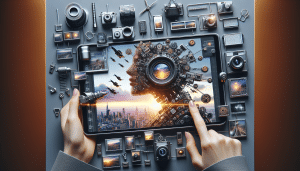
Why Artificial Intelligence Might Change Everything
Percival Thorn November 10, 2025
Curious about the rapid advance of artificial intelligence? Explore the latest ways AI is being woven into daily life, how it affects the workforce, and the emerging ethical debates. This deep dive reveals the subtle impact of AI across industries and what it could mean for the future of technology.
Understanding Artificial Intelligence in Everyday Contexts
Artificial intelligence has moved beyond science fiction and now influences daily routines in ways that are both subtle and profound. From predictive text on smartphones to personalized streaming recommendations, machine learning algorithms shape digital environments. Much of this technology remains hidden in plain sight, quietly powering applications that millions use each day. These advancements rely on processing vast amounts of data to predict preferences, detect anomalies, and automate routine tasks. The integration of deep learning, neural networks, and natural language processing is making technologies smarter through self-improving techniques.
One might notice artificial intelligence when virtual assistants schedule appointments, deliver reminders, or provide real-time translations during video calls. These tools leverage speech recognition and intent prediction to serve user needs efficiently. In many homes, smart devices interpret spoken commands, execute tasks, and even adjust their responses based on owner habits. The transformative nature of AI shows that technology is not just reactive anymore; it’s becoming proactively adaptive, creating seamless environments that feel almost intuitive.
Beyond consumer-facing applications, AI supports public infrastructure as well. Smart traffic lights adjust flow based on congestion, and emergency services use prediction models to better deploy resources. Healthcare systems employ algorithms for early disease detection and patient monitoring, driving innovation that directly impacts well-being. AI’s ability to adapt in real time underscores its growing significance across various segments of society. In this evolving landscape, understanding artificial intelligence is key to grasping the scope of changes coming to everyday life.
The Impact of AI on Modern Workplaces
Artificial intelligence is changing the workplace, guiding how employees interact with new technologies and reshaping job requirements. In many sectors, AI reduces repetitive labor, allowing people to focus on complex problem-solving or creative pursuits. Advanced robotics on assembly lines and smart systems in logistics have streamlined operations, heightened productivity, and even reduced workplace accidents by handling hazardous tasks. Automation is not just replacing jobs—it’s transforming them and creating demand for tech-savvy individuals who can design, maintain, and optimize AI-driven systems.
Collaboration between humans and machines is rising. Marketing teams use AI-powered analytics to develop campaigns with pinpoint accuracy. Finance departments rely on pattern recognition to detect fraud and assess risk in real time. Even the world of education is electrified by adaptive learning platforms that tailor instruction to individual needs. As organizations further embrace AI, there is a growing emphasis on digital literacy and reskilling, giving professionals new tools to excel in rapidly changing environments. The ability to adapt to artificial intelligence is becoming a critical skill for workforce resilience.
This rapid transformation introduces challenges too. Concerns about job displacement, algorithmic bias, and data privacy complicate the adoption of AI technologies. Employers and policymakers must reconsider workforce strategies, emphasizing lifelong learning and ethical guidelines. By understanding these complexities, organizations and employees alike can better navigate the intersection of technology and the modern workplace. Artificial intelligence may shift traditional roles, but it also opens doors for new careers, industries, and unforeseen possibilities in the digital age.
Unlocking the Potential of AI in Healthcare and Science
AI technologies are accelerating change across healthcare and scientific research, opening new avenues for diagnosis, treatment, and discovery. Machine learning models analyze patient data, offering insights that support earlier intervention in conditions like cancer or heart disease. Robotics-assisted surgeries enhance precision, while natural language understanding solutions streamline administrative work and improve doctor-patient communication. These innovations collectively drive better health outcomes while increasing efficiency for clinicians and healthcare providers.
Research labs leverage artificial intelligence for complex simulations and the analysis of massive datasets, expediting breakthroughs in drug discovery and genomics. AI’s capacity to identify patterns across vast troves of information allows scientists to formulate new hypotheses and test them with shocking speed. In the context of public health, surveillance systems equipped with AI techniques help predict disease outbreaks and optimize allocation of medical resources, making preparedness more robust and responsive.
Nevertheless, integrating artificial intelligence in health and science raises questions about transparency, liability, and access. Algorithms must be carefully validated to avoid errors or biases that could affect patient care. Regulatory bodies and research institutions are actively developing guidelines to ensure that the benefits of AI are shared equitably and ethically. Continuous dialogue among technologists and healthcare practitioners is necessary to maximize positive outcomes while mitigating risks. AI’s contributions to medicine and science are profound—and still unfolding.
The Ethical Landscape of AI Development
As artificial intelligence becomes more ubiquitous, discussions around ethics and accountability intensify. Decisions about algorithm design, data use, and transparency are drawing scrutiny from the public, policymakers, and technologists. There is a growing consensus that AI systems must operate with fairness and avoid causing harm. To achieve that, experts are developing frameworks that address potential sources of bias, ensure privacy protection, and allow explanations for automated decisions.
Some of the most pressing concerns relate to data privacy, surveillance, and the misuse of AI in areas like facial recognition or automated decision-making. Imbalances in data or flawed assumptions can hardwire discrimination into algorithms, reproducing or amplifying inequalities. To counteract this, research institutions advocate for inclusive datasets and transparent evaluation methods. The idea of explainable AI—systems whose logic can be understood and challenged—is central to building public trust in emerging technology.
Regulatory responses around the globe are evolving, with some regions introducing comprehensive legislation designed to govern the development and deployment of AI. Industry organizations and advocacy groups promote self-regulation, while academics and ethicists contribute research to inform best practices. Ongoing discussion between all stakeholders will help ensure technology supports, rather than endangers, fundamental human rights. As AI continues to advance, the ethical conversation will only grow more urgent and nuanced.
AI and the Future of Decision Making
Artificial intelligence is set to redefine how decisions are made in everything from business to public policy. Decision support tools use predictive analytics, scenario modeling, and real-time feedback, empowering leaders to act more swiftly and confidently. This technology democratizes access to high-quality insights, enabling smaller organizations to compete with larger counterparts. Data-driven approaches can sometimes spot trends and risks humans might overlook.
However, the increasing reliance on AI-generated recommendations brings new types of challenges. Overdependence on automated tools can cause people to lose critical thinking skills or depend uncritically on outputs that might be flawed. Organizations are exploring hybrid decision-making models, blending automation with human oversight, to ensure creative solutions and prevent systemic errors. Training and continued education in data literacy is now essential for many decision-makers.
Some experts predict AI could help address global challenges through more coordinated responses and smarter resource allocation. Yet, there is an ongoing dialogue about where human judgement should override algorithmic advice, especially when values, ethics, or unpredictable real-world variables are in play. Artificial intelligence is not just about automating decisions—it’s about augmenting the ability to make wiser, more strategic choices across society.
What to Expect as Artificial Intelligence Evolves
The next wave of artificial intelligence is likely to be even more personalized, adaptive, and pervasive. Technologies may evolve to anticipate user needs long before they are spoken, curating experiences uniquely tailored for each person. This level of integration suggests not only increased convenience but also a reimagining of privacy, autonomy, and consent in everyday digital life. The boundary between virtual intelligence and physical reality is set to blur further.
Innovation continues at a rapid pace, with major investments pouring into AI research globally. Major milestones, such as natural conversation with virtual agents or self-driving vehicles operating seamlessly in traffic, are already within view. Industry leaders, governments, and the public are all negotiating the balance between innovation and precaution, hoping to shape the future toward responsible and inclusive outcomes.
Remaining informed and engaged in conversations about artificial intelligence will be essential for anyone who uses technology. Everyone, from students to business professionals, can benefit from understanding AI’s implications and learning how to critically assess new solutions. As this journey unfolds, fostering an open approach to curiosity and lifelong learning may be the best way to thrive in an era powered by artificial intelligence.
References
1. European Commission. (n.d.). Ethics guidelines for trustworthy AI. Retrieved from https://digital-strategy.ec.europa.eu/en/library/ethics-guidelines-trustworthy-ai
2. U.S. Food & Drug Administration. (n.d.). Artificial Intelligence and Machine Learning in Software as a Medical Device. Retrieved from https://www.fda.gov/medical-devices/software-medical-device-samd/artificial-intelligence-and-machine-learning-software-medical-device
3. Stanford University. (n.d.). AI Index Report. Retrieved from https://aiindex.stanford.edu/report/
4. The Alan Turing Institute. (n.d.). Understanding artificial intelligence ethics and safety. Retrieved from https://www.turing.ac.uk/research/impact-research/understanding-artificial-intelligence-ethics-and-safety
5. Nature. (n.d.). The real-world impact of artificial intelligence in healthcare. Retrieved from https://www.nature.com/articles/d41586-020-03409-8
6. World Economic Forum. (n.d.). The Next Era of Human-Machine Partnerships. Retrieved from https://www.weforum.org/agenda/2021/02/ai-next-era-human-machine/

 Secrets of Sustainable Fashion You’d Love to Explore